

What Are the Horsepower and Torque Ratings for the 2026 Toyota Tundra i-FORCE MAX Hybrid?
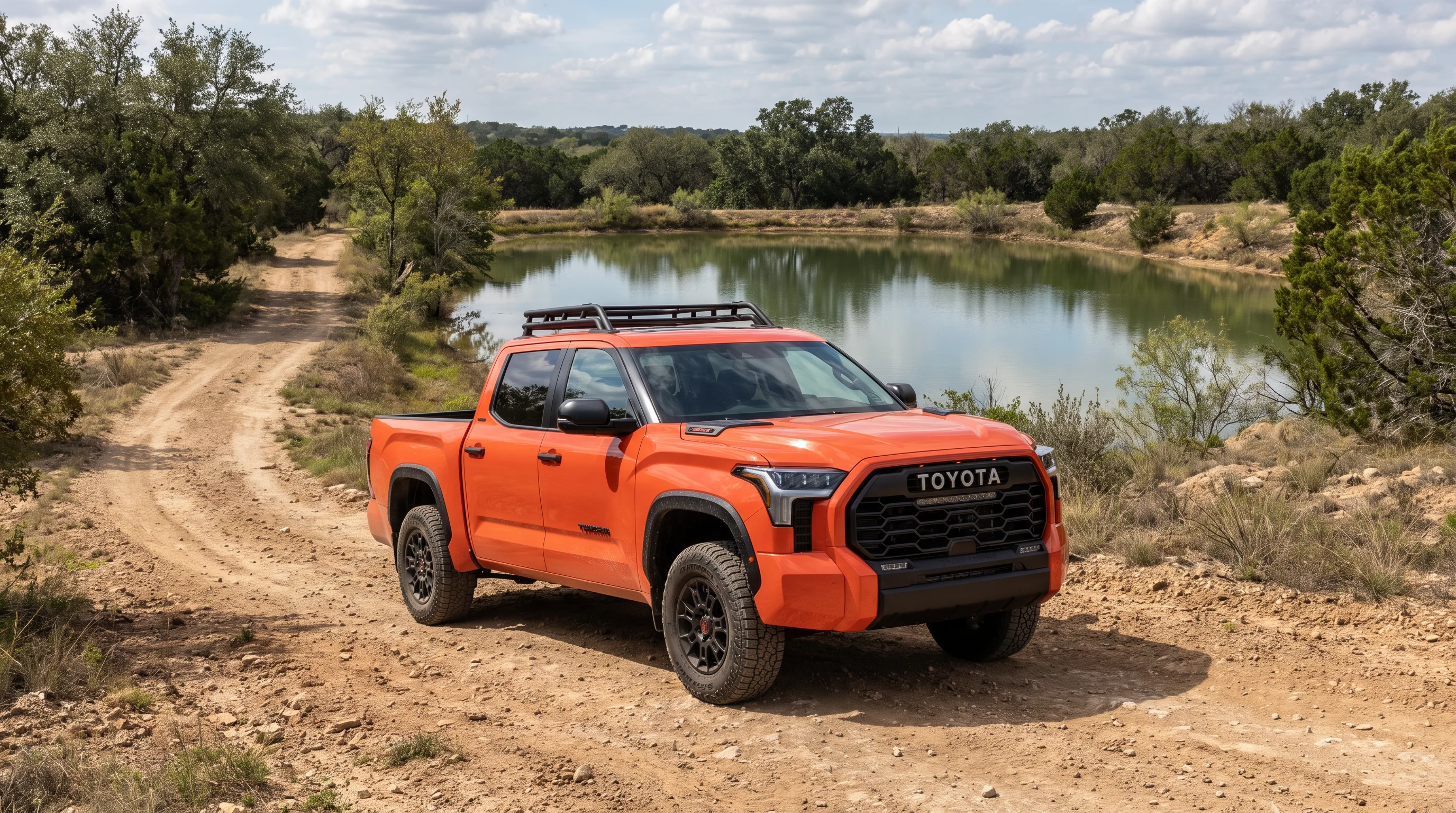
The 2026 Toyota Tundra i-FORCE MAX hybrid powertrain produces 437 net combined horsepower at 5,200 rpm and 583 lb-ft of torque at 2,400 rpm, according to Toyota’s 2026 Tundra press release. It pairs a twin-turbo V6 with an electric motor generator to deliver strong low-end pull, confident highway merging, and serious towing capability.
That torque figure is the one worth understanding, and specifically where it arrives. Peak twist comes on at just 2,400 rpm. The truck pulls hard from low engine speeds instead of making you wait for the tachometer to climb.
For context within the lineup, the non-hybrid i-FORCE V6 fitted to the SR5, Limited, Platinum, and 1794 Edition produces 389 horsepower and 479 lb-ft. The hybrid system adds 48 horsepower and 104 lb-ft over that tune.
Below, we cover how the system is built, what it returns at the pump, what it can pull, and how Toyota covers it.
2026 Tundra i-FORCE MAX Powertrain Specifications
| Specification | 2026 Tundra i-FORCE MAX |
|---|---|
| Net combined horsepower | 437 hp @ 5,200 rpm |
| Net combined torque | 583 lb-ft @ 2,400 rpm |
| Gasoline engine | 3.4L twin-turbo V6 |
| Electric motor output | 48 hp (36 kW) / 184 lb-ft |
| Motor type and placement | Permanent magnet synchronous motor generator, inside the bell housing between engine and transmission |
| Transmission | 10-speed Electronically Controlled Automatic Transmission with intelligence (ECT-i) |
| Hybrid battery | 288V sealed Nickel-Metal Hydride, 1.87 kWh |
What Engine and Transmission Power the 2026 Tundra i-FORCE MAX?
The 2026 Tundra i-FORCE MAX combines a 3.4-liter twin-turbo V6 gasoline engine with a 48-horsepower electric motor generator, paired to a 10-speed Electronically Controlled Automatic Transmission with intelligence (ECT-i).
How the hybrid system is laid out
Toyota positions the motor generator, along with a clutch, inside the bell housing between the engine and the 10-speed automatic. Power routes through the transmission rather than through a power-split planetary device.
That parallel layout is why the Tundra hybrid feels less like a hybrid and more like a torque-rich truck engine. The electric motor handles engine start-up, low-speed electric driving, electric assist under acceleration, and energy regeneration. The gearbox itself behaves like any other 10-speed automatic.
What the 10-speed transmission adds
The transmission is shared across the Tundra lineup. It includes sequential shift mode, uphill and downhill shift logic, and dedicated TOW and HAUL driving modes.
Those shift maps matter most when the truck is loaded, holding gears on a descent or keeping revs where the torque lives while pulling a grade.
Which 2026 Tundra grades offer the i-FORCE MAX
The i-FORCE MAX comes standard on two grades and is available as an upgrade on three more. The SR and SR5 are offered with the gas i-FORCE V6 only.
| 2026 Tundra Grade | Gas i-FORCE V6 | i-FORCE MAX Hybrid |
|---|---|---|
| SR | Standard (348 hp / 405 lb-ft) | Not offered |
| SR5 | Standard (389 hp / 479 lb-ft) | Not offered |
| Limited | Standard (389 hp / 479 lb-ft) | Available upgrade |
| Platinum | Standard (389 hp / 479 lb-ft) | Available upgrade |
| 1794 Edition | Standard (389 hp / 479 lb-ft) | Available upgrade |
| TRD Pro | Not offered | Standard (437 hp / 583 lb-ft) |
| Capstone | Not offered | Standard (437 hp / 583 lb-ft) |
If you want to see which hybrid configurations are actually on the ground, browse our 2026 Tundra i-FORCE MAX inventory.
What Is the EPA-Estimated Fuel Economy for the 2026 Tundra Hybrid?
Two-wheel-drive i-FORCE MAX models earn EPA-estimated ratings of up to 20 mpg city and 24 mpg highway. Four-wheel-drive versions come in at up to an EPA-estimated 19 mpg city and 22 mpg highway. EPA-estimated ratings for every configuration are published at fueleconomy.gov.
Where the hybrid saves fuel
The hybrid system does its most visible work in stop-and-go driving. At low speeds and under light load, the system can run on electric power alone for short stretches. Regenerative braking recaptures energy that would otherwise be lost every time you slow down.
That is where the EPA-estimated fuel economy gap over the gas-only i-FORCE opens up.
Fuel tank and aerodynamics
New for the 2026 model year, every Tundra grade now comes with a 32.2-gallon fuel tank, per Toyota’s 2026 Tundra announcement. That change eliminates the smaller tank that had been fitted to some configurations.
Models equipped with the available active front spoiler adjust airflow automatically at speed to reduce drag, and active grille shutters manage how much air passes through the grille.
| 2026 Tundra i-FORCE MAX Configuration | EPA-Estimated City MPG | EPA-Estimated Highway MPG | EPA-Estimated Combined MPG |
|---|---|---|---|
| i-FORCE MAX Hybrid (2WD) | 20 mpg | 24 mpg | 22 mpg |
| i-FORCE MAX Hybrid (4WD) | 19 mpg | 22 mpg | 20 mpg |
| i-FORCE MAX TRD Pro (4WD) | 18 mpg | 20 mpg | 19 mpg |
For the full picture across both gas and hybrid configurations, see our 2026 Tundra EPA-estimated fuel economy breakdown.
EPA-estimated fuel economy figures are for comparison purposes only. Your actual mileage will vary depending on driving conditions, how you drive and maintain your vehicle, battery age/condition, and other factors.
How Much Can the 2026 Tundra i-FORCE MAX Tow?
When properly equipped, the 2026 Tundra i-FORCE MAX tows up to 11,450 pounds.
It is worth being precise here. The 12,000-pound figure frequently attached to the Tundra belongs to one specific gas i-FORCE configuration, the SR5 Double Cab 4×2 with the 6.5-foot bed, not to the hybrid. The i-FORCE MAX carries the added mass of the motor and battery pack, which trims the ceiling slightly. Maximum ratings also vary meaningfully from one hybrid grade to the next.
Why the structure matters as much as the output
Towing composure comes from structure as much as from power. A fully boxed high-strength steel ladder frame resists twisting under tongue weight.
The bed is built from sheet-molded compound with aluminum reinforcing cross members. That construction helps it shrug off dents, impact dings, and rust better than a traditional steel deck.
Trailering technology
Several trailering aids support the driver once the trailer is attached, as detailed on Toyota’s Tundra model page:
Integrated Trailer Brake Controller
Synchronizes the trailer’s electric brakes with the truck’s own braking for smoother, more predictable stops under load.
Trailer Backup Guide with Straight Path Assist
Available. Uses cameras and sensors to help keep the trailer tracking straight while reversing.
Panoramic View Monitor
Available. Combines front, side, and rear cameras into a 360-degree view for hitching and tight maneuvering.
Power-Extending Tow Mirrors
Available. Power-extending and power-folding mirrors widen the rearward view along the sides of a trailer.
Bed configuration affects what you can carry as well as what you can pull. Our guide to 2026 Tundra bed sizes covers the cab and bed combinations in detail.
Maximum towing and payload capacity figures are based on properly equipped vehicles and vary by configuration. Do not exceed any weight rating. See your owner’s manual and the vehicle’s door-jamb label for specific capacities.
Driver-assistance and advanced safety systems are supplemental aids and are not substitutes for safe and attentive driving. Availability, operation, and effectiveness vary by trim and equipment and depend on factors including road, weather, traffic, and vehicle condition. Always keep your hands on the wheel and your eyes on the road. See your owner’s manual for system limitations and details.
What Warranty Coverage and Battery Specs Protect the 2026 Tundra Hybrid?
The hybrid battery
The hybrid system draws on a 288-volt sealed Nickel-Metal Hydride battery with 1.87 kWh of capacity. It sits under the rear passenger seats, where it stays clear of road debris and cargo bed impacts.
The sealed pack requires no external charging and no owner maintenance intervals.
How Toyota covers the 2026 Tundra
Coverage on the 2026 Tundra breaks down as follows, per Toyota’s electrified-vehicle warranty page:
| Coverage | Term | Mileage Limit |
|---|---|---|
| Hybrid battery | 10 years from date of first use | 150,000 miles |
| EV drive components (traction battery, transaxle, inverter with converter) | 8 years | 100,000 miles |
| Powertrain | 60 months | 60,000 miles |
| Basic new-vehicle limited warranty | 36 months | 36,000 miles |
This information is provided for general educational purposes only and does not constitute legal advice. Warranty coverage depends on the specific terms of your vehicle’s warranty agreement. Consult your owner’s manual or a qualified legal professional for guidance on your individual situation.
Common Questions About the 2026 Toyota Tundra i-FORCE MAX
What transmission comes with the 2026 Tundra i-FORCE MAX hybrid?
A 10-speed Electronically Controlled Automatic Transmission with intelligence (ECT-i) is used across the 2026 Tundra lineup, including every i-FORCE MAX model. It features sequential shift mode, uphill and downhill shift logic, and TOW and HAUL driving modes.
Where is the electric motor located in the Tundra i-FORCE MAX hybrid system?
The motor generator sits inside the bell housing between the 3.4-liter twin-turbo V6 and the 10-speed automatic transmission, along with a clutch. That position lets electric power route straight through the transmission rather than through a separate power-split device.
Does the 2026 Tundra i-FORCE MAX need to be plugged in?
No. The 2026 Tundra i-FORCE MAX is a hybrid that never needs to be connected to a wall outlet or charging station. The 288-volt Nickel-Metal Hydride battery replenishes itself through regenerative braking and through energy produced during normal operation.
What is the factory warranty on the Tundra hybrid battery?
Toyota covers the hybrid battery for 10 years from date of first use or 150,000 miles, whichever comes first. EV drive components, including the traction battery, transaxle, and inverter with converter, are covered for 8 years or 100,000 miles.
How does electric-only driving work on the 2026 Tundra i-FORCE MAX?
The system can operate on electric power alone at low speeds over short distances, such as easing through a parking lot or crawling in traffic. As speed or demand increases, the twin-turbo V6 restarts seamlessly to supply full power.
Experience the 2026 Tundra i-FORCE MAX at Legacy Toyota of Dallas
The 437-horsepower, 583-lb-ft i-FORCE MAX hybrid is the kind of powertrain that reads well on paper and reads better from the driver’s seat. Feeling that low-rpm torque arrive is the fastest way to know whether this is the right truck for your work and your weekends.
Our team at Legacy Toyota of Dallas can walk you through the hybrid grades, show you how the trailering technology works, and set up a test drive. Visit us at 39660 Lyndon B Johnson Fwy, Dallas, TX 75237, or call 945-207-3254 to check current availability.