

How to Charge Your Toyota EV or Plug-In Hybrid at Home in Dallas
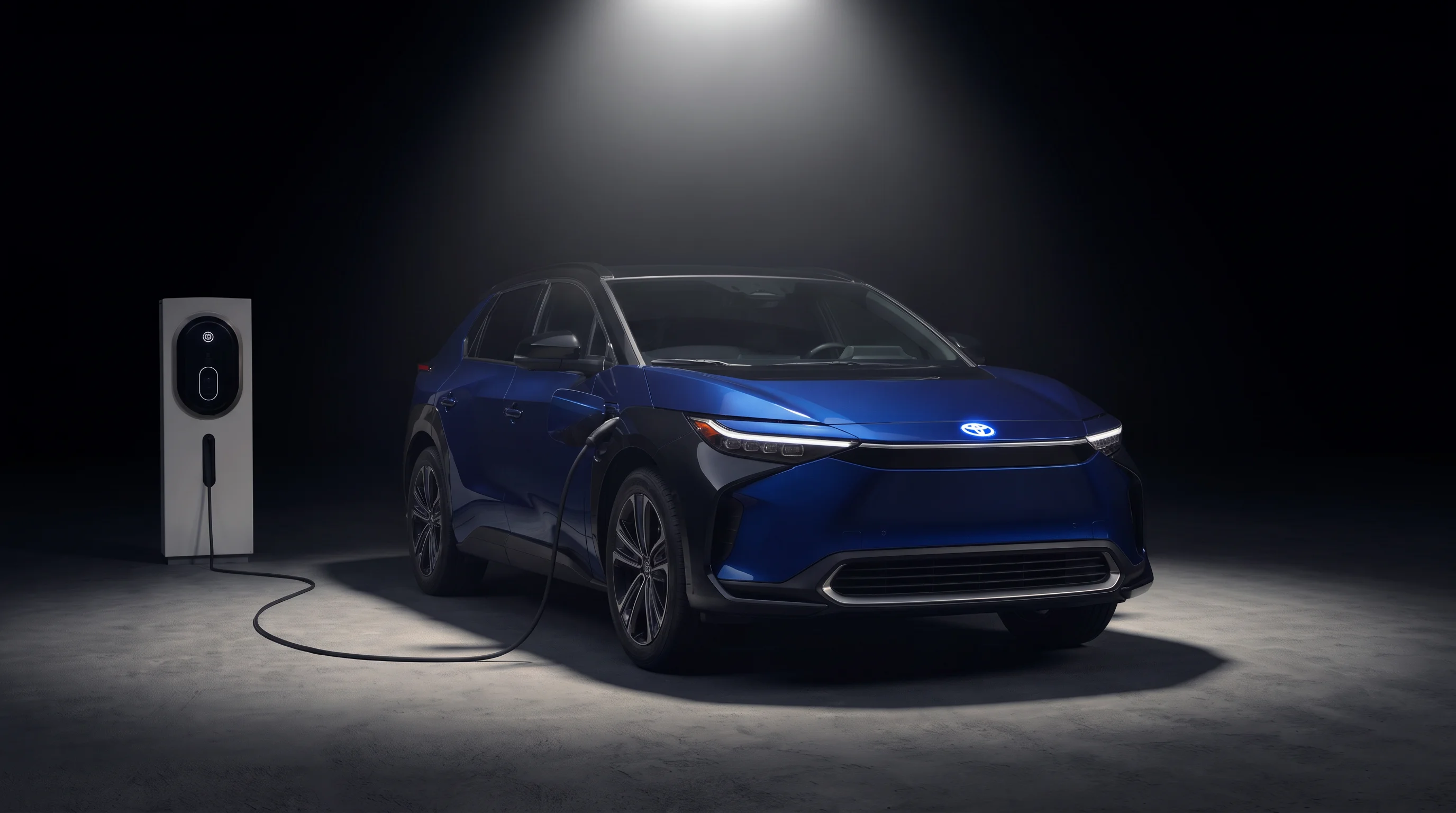
First-time hybrid and EV shoppers usually ask whether they need a 240-volt outlet at home before they ask about charge times. The answer comes down to two things: your vehicle’s powertrain and how many miles you actually drive in a day.
If you are shopping a plug-in hybrid, an ordinary household outlet is often enough. On a standard 120-volt outlet, a full charge takes about 11 hours for the Prius Plug-in Hybrid — an overnight session — and a 240-volt Level 2 charger cuts that to about four hours.
An all-electric Toyota bZ is the other case. Level 1 is too slow to serve as primary charging, so Level 2 is the setup that fits daily driving: on an 11-kW (48-amp) station, Toyota estimates the battery goes from 10% to 100% in about seven hours.
Level 1 vs. Level 2 Charging at a Glance
| Charging Factor | Level 1 (120-Volt) | Level 2 (240-Volt) |
|---|---|---|
| Outlet or circuit | Any grounded household outlet | Dedicated 240-volt circuit, typically 40 to 60 amps; a 48-amp charger requires a 60-amp circuit |
| Equipment needed | Dual-voltage cable included with the vehicle | Wall-mounted charging station (EVSE) |
| Power delivered to the vehicle | 120 volts at about 12 amps | 240 volts, up to 11 kW (48 amps) on the Toyota bZ |
| Prius Plug-in Hybrid, full charge | About 11 hours | About 4 hours |
| RAV4 Plug-in Hybrid, full charge | Considerably longer than the Prius Plug-in Hybrid; Toyota does not publish a Level 1 time | About 3.5 hours on SE and GR SPORT; about 2.5 hours on XSE and Woodland |
| Toyota bZ, 10% to 100% | About 60 hours at 12 amps | About 7 hours on an 11-kW source |
| Installation required | None | Licensed electrician |
Drivers with a steady routine often find Level 1 is enough for a plug-in hybrid. Level 2 adds margin. You get range back fast after an unplanned errand or an evening trip. To see charging setups in person, visit our showroom at 39660 Lyndon B Johnson Fwy, Dallas, TX 75237, or call our sales team at 945-207-3254.
Can a Toyota Plug-In Hybrid or bZ Charge From a Standard 120V Wall Outlet?
Yes. Toyota plug-in hybrids and the all-electric bZ all plug into a standard 120-volt household outlet. Each one comes with a dual-voltage cable. You do not need to buy extra hardware to charge from an ordinary three-prong outlet.
Charge times depend on battery size:
- Toyota Plug-In Hybrids — The Prius Plug-in Hybrid carries a 13.6-kWh battery and the RAV4 Plug-in Hybrid a 22.7-kWh battery. A full charge from empty on Level 1 power takes about 11 hours for the Prius Plug-in Hybrid, which makes a standard wall outlet a practical overnight solution. The RAV4 Plug-in Hybrid’s larger battery takes considerably longer on Level 1, so drivers of that model are better served by a Level 2 station.
- Toyota bZ (All-Electric SUV) — With battery capacity up to 74.7 kWh, Toyota estimates a Level 1 charge from 10% to 100% takes about 60 hours. Level 1 works for topping off a few miles after a short drive, but it is too slow to serve as primary charging for an all-electric vehicle.
Level 1 lets plug-in hybrid owners drive on electricity every day with no electrical upgrades at all. When the electric range runs out, the gas engine takes over and you keep driving.
What Equipment and Electrical Panel Upgrades Does a Level 2 Home Charger Need?
A Level 2 setup needs three things. You need a wall-mounted charging unit, also called an EVSE. You need a dedicated 240-volt breaker. And you need a panel that can carry a steady 32- to 48-amp load.
The bZ has a built-in North American Charging System (NACS) port. It also ships with adapters. Those let you charge on J1772 equipment at Level 1 and Level 2, and on CCS1 fast chargers.
What an Electrician Checks First
- Electrical panel capacity — Whether your panel can carry a dedicated 240-volt charging circuit alongside central air conditioning, an electric water heater, and other major appliances is determined by a load calculation, not by panel size alone.
- Panel upgrades — An older 100-amp or 125-amp main breaker panel may need upgrading before a high-draw Level 2 station is added. Load-management devices that throttle the charger when household demand is high are sometimes a lower-cost alternative.
- Hardwired vs. plug-in units — A hardwired station supports higher amperage and avoids the GFCI-breaker requirement that applies to NEMA 14-50 outlets. A NEMA 14-50 plug-in unit can be unplugged and relocated if you move. Your electrician can confirm which approach your local code allows.
The bZ has an 11-kW onboard charger. On an 11-kW (48-amp) Level 2 station, it goes from 10% to 100% in about seven hours. The dual-voltage cable packed with the vehicle charges at a lower rate, so reaching that time takes a dedicated station on a 60-amp circuit.
What Does a Home Charger Installation Cost?
Installer data for Texas puts the average Level 2 home charger installation at $1,810, with projects starting around $749 before any site-specific electrical work.
| Project Component | Average Cost in Texas, 2026 |
|---|---|
| Level 2 charger installation | $1,810 |
| Electrical permit | $557 |
Several things move that number: local labor rates, your charger’s power requirements, the age and condition of your electrical panel, the distance between the panel and the charger, any drilling or trenching the run requires, and local permit fees.
Utility Programs in the Dallas Area
Oncor, the transmission and distribution utility serving most of the Dallas area, has offered point-of-sale discounts on select Level 2 chargers through its residential efficiency program. Program availability, eligible equipment, and discount amounts change by program year, so confirm current terms directly with Oncor and your retail electricity provider before you buy.
Home charging equipment and installation cost figures are third-party estimates provided for general informational purposes only. Actual costs vary by home, electrical service, local labor rates, permit fees, and site conditions. The dealership does not perform, arrange, or warrant residential electrical work. Obtain a written quote from a licensed electrician before proceeding.
Can You Control When Your Toyota Charges?
Yes. The Toyota app can schedule charging, track charge status, estimate range, and show charging costs. You need an active Remote Connect trial or subscription. A schedule also lets you move charging to off-peak hours if your electricity plan has time-of-use rates.
Which Electrified Toyota Fits Your Daily Driving in Dallas?
The right electrified Toyota comes down to three things. How far do you drive each day? Can you charge at home? And do you want to go fully electric, or keep a gas engine as backup?
- Toyota bZ (All-Electric SUV) — Built for drivers moving away from gasoline entirely. The XLE FWD Plus grade carries an EPA-estimated 314-mile total driving range rating on the 74.7-kWh battery. Its 11-kW onboard charger means a Level 2 home station returns a full battery overnight.
- RAV4 Plug-In Hybrid — Carries an EPA-estimated 54-mile all-electric driving range rating on the SE grade, backed by a gas engine for longer trips.
- Prius Plug-In Hybrid — Offers an EPA-estimated 44-mile all-electric driving range rating on the SE grade, and an EPA-estimated 52 MPG combined on the SE grade when operating as a hybrid.
EPA-estimated fuel economy figures are for comparison purposes only. Your actual mileage will vary depending on driving conditions, how you drive and maintain your vehicle, battery age/condition, and other factors.
Common Questions About Toyota Home Charging
Does the Toyota bZ include a charging cable for home use?
Yes. The bZ comes standard with a dual-voltage charging cable capable of both 120-volt (Level 1) and 240-volt (Level 2) charging. Using that cable for Level 2 charging at home requires a 240-volt NEMA 14-50 outlet.
How fast does a Level 2 home charger refill a Toyota plug-in hybrid?
A 240-volt Level 2 charger brings the Prius Plug-in Hybrid to a full charge in about four hours. The RAV4 Plug-in Hybrid takes about 3.5 hours on the SE and GR SPORT grades, and about 2.5 hours on the XSE and Woodland grades, which use a larger onboard charger.
Do I need a permit to install a Level 2 home charger?
Most jurisdictions require a standard electrical permit for a new dedicated 240-volt circuit. A licensed electrician typically handles the permit as part of the installation.
Are federal tax credits currently available for a new EV home charger?
No. Under Public Law 119-21, the Section 30C Alternative Fuel Vehicle Refueling Property Credit ended for property placed in service after June 30, 2026. Separately, the federal clean vehicle credits for new, previously owned, and commercial vehicles ended for vehicles acquired after September 30, 2025. Utility programs may still be available through your electricity provider.
Tax credit and incentive information is provided for general informational purposes only and does not constitute tax or legal advice. Federal, state, and utility program eligibility, amounts, and deadlines are subject to change and depend on individual circumstances. Consult a qualified tax professional and confirm current program terms with the administering agency or utility before making a purchase decision.
Planning Your Toyota Charging Setup at Legacy Toyota of Dallas
A good home charging routine starts with the right vehicle. Our team can walk you through the features, the charging needs, and what ownership looks like day to day. Explore the full electrified Toyota lineup before you visit, or go straight to our bZ, RAV4 Plug-in Hybrid, and Prius Plug-in Hybrid inventory.
To test-drive our electrified lineup or discuss home charging, visit us at 39660 Lyndon B Johnson Fwy, Dallas, TX 75237, or call our sales team at 945-207-3254.
0 comment(s) so far on How to Charge Your Toyota EV or Plug-In Hybrid at Home in Dallas