

Do Toyota Hybrids Need Special Maintenance? Common Questions Answered
Toyota hybrids require two specific maintenance services that standard gasoline cars do not. The first is periodic inspection and cleaning of the hybrid battery cooling air filter on applicable models. The second is scheduled servicing of the inverter cooling system, which uses specialized high-voltage coolant. Beyond these two cooling requirements, Toyota hybrids follow standard maintenance routines. That means engine oil changes, tire rotations, and cabin air filter replacements.
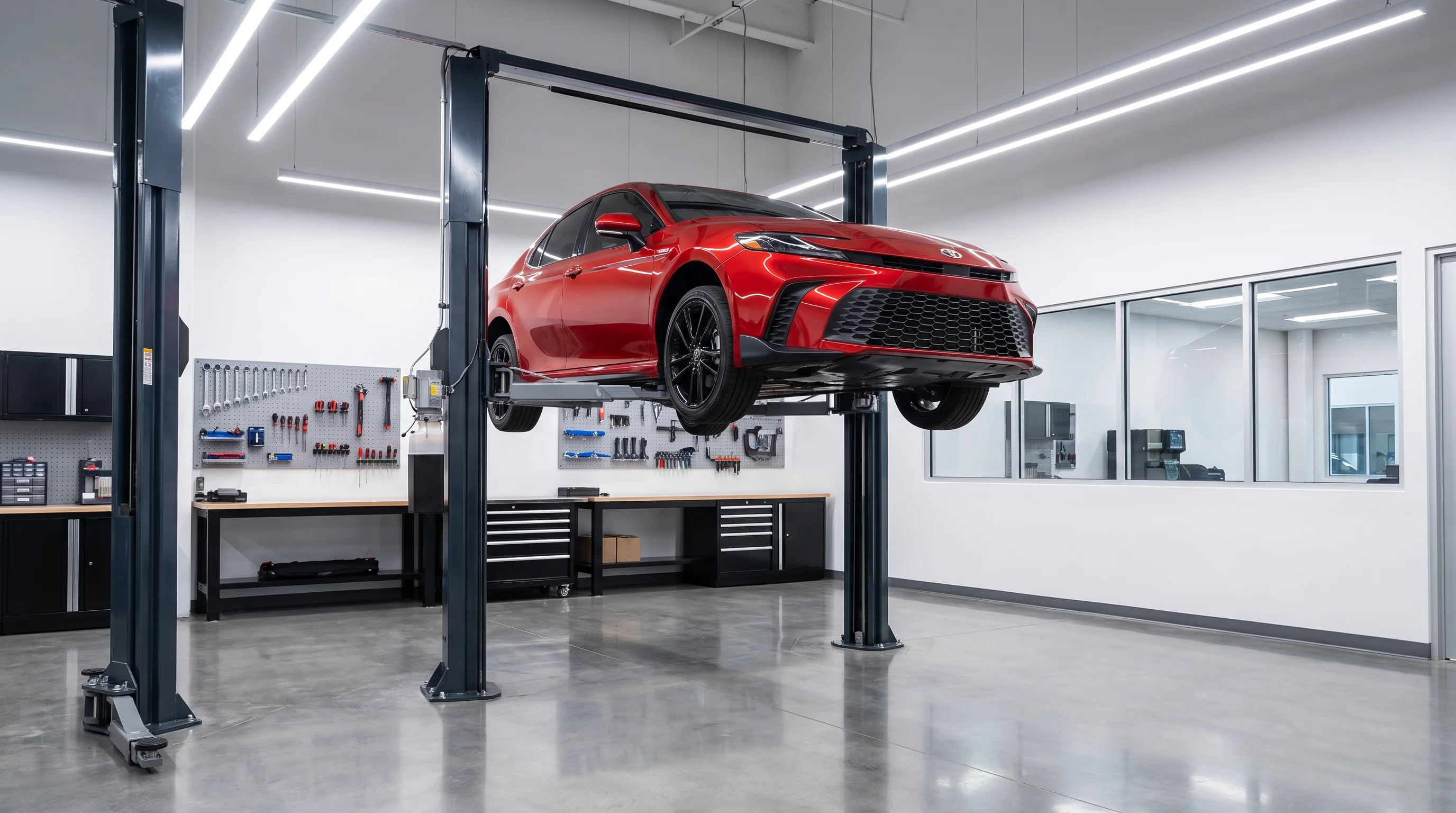
The Two Cooling Systems That Make Hybrid Service Different
On most Toyota hybrids, the hybrid battery cooling system relies on an intake vent near the rear seats. It draws cabin air across the high-voltage battery. Dust, pet hair, and debris build up on the filter screen over time. Restricted airflow allows battery temperatures to rise. On applicable models, Toyota’s guidance is to inspect this filter every 5,000 miles. If airflow becomes blocked, the hybrid system restricts battery usage to prevent thermal damage. The gas engine then runs more often, and fuel efficiency drops.
The second requirement involves the inverter cooling circuit. Toyota hybrids have a dedicated cooling system, separate from the engine radiator. It keeps the power electronics and electric motor-generators at safe temperatures. This system uses Toyota Super Long Life Coolant, the pink, pre-diluted 50/50 ethylene glycol formula Toyota specifies for both the engine and inverter cooling loops. Keeping coolant levels correct and replacing the fluid at the interval listed in your owner’s manual helps prevent thermal degradation of the power control unit.
Routine hybrid diagnostics also include factory-level health scans of the hybrid control module. These scans read module voltages, state-of-charge balances, and resistance values across the traction pack. Need guidance on hybrid maintenance intervals? Visit our Dallas service center or call our service team at 945-758-1471.
The information in this article is general guidance and does not constitute a specific diagnostic or repair recommendation for any individual vehicle. Repair and maintenance decisions should be made in consultation with a certified technician based on the specific condition of your vehicle.
Do Toyota Hybrids Require Special Maintenance Compared to Standard Gas Vehicles?
Toyota hybrids do not require overly complex or frequent maintenance compared to conventional gasoline vehicles. Standard wear-and-tear care — engine oil changes, brake inspections, tire pressure checks, and fluid top-offs — is identical to non-hybrid models in both frequency and procedure.
Toyota Hybrid Maintenance Intervals at a Glance
A Toyota hybrid still uses an internal combustion engine alongside its electric motors. That engine needs routine oil and filter replacements on a normal schedule. The table below summarizes the intervals covered in this article.
| Maintenance item | Interval |
|---|---|
| Engine oil and filter, full synthetic (0W-16 or 0W-20 depending on engine), normal conditions | 10,000 miles or 12 months |
| Engine oil and filter, severe operating conditions | 5,000 miles or 6 months |
| Hybrid battery cooling air filter inspection, applicable models | Every 5,000 miles |
| Inverter coolant | Level checks at routine visits; first replacement at 150,000 miles or 180 months, then every 50,000 miles or 60 months |
| eCVT transaxle fluid, power-split hybrids | Periodic inspection; replacement per owner’s manual |
| Brake fluid | Periodic replacement per owner’s manual |
What Counts as Severe Operating Conditions
Severe conditions shorten the oil interval. Frequent short trips in extreme heat, heavy stop-and-go driving, and dusty roads all drop the recommendation to 5,000 miles or 6 months. Oil grade varies by engine as well. Some Toyota hybrid engines specify 0W-16 rather than 0W-20, and a different grade does not by itself mean a shorter interval, so your owner’s manual confirms both the grade and the interval for your vehicle. The engine oil removes combustion byproducts and lubricates internal components whenever the gas engine is active.
eCVT Transmission Care
Power-split Toyota hybrids, including the Prius, Corolla Hybrid, Camry Hybrid, and RAV4 Hybrid, use an electronically controlled continuously variable transmission, or eCVT. It uses planetary gear sets rather than belts, pulleys, or torque converters. The design has fewer moving friction parts than a conventional automatic. Fluid breaks down more slowly as a result. Routine eCVT maintenance means periodic fluid inspections for leaks and quality. Replacement follows owner’s manual guidelines.
Toyota’s i-FORCE MAX truck and SUV hybrids are built differently. On the Tundra, Sequoia, Tacoma, 4Runner, and Land Cruiser, a motor generator sits between the gas engine and a conventional automatic transmission, so transmission service follows the schedule for that gearbox rather than an eCVT schedule.
Keep the Battery Intake Vent Clear
One practical habit matters more than most drivers realize. Keep the rear-seat cooling intake vent clear of jackets, luggage, and pet covers. That lets the thermal management system regulate battery temperatures without straining the cooling fan motor.
The information in this article is general guidance and does not constitute a specific diagnostic or repair recommendation for any individual vehicle. Repair and maintenance decisions should be made in consultation with a certified technician based on the specific condition of your vehicle.
Which Routine Maintenance Items Are Cheaper on a Toyota Hybrid?
Friction brake wear drops on any Toyota hybrid, and power-split models also eliminate the conventional starter and alternator entirely. Those savings add up over the vehicle’s lifespan.
Brake Pad Life: Hybrid vs. Conventional Gas
Regenerative braking is the main reason brake wear drops. The electric motor slows the vehicle and recaptures kinetic energy to recharge the traction battery. During initial deceleration, the friction pads and rotors stay disengaged. The electric motor generates the braking resistance instead. Traditional pads and rotors engage mainly during hard stops. They also engage at low speed, bringing the car to a full halt.
Toyota does not publish a brake pad service life figure, and real-world pad life depends on driving habits, terrain, and local conditions. What is consistent is the mechanism: because the friction brakes do less of the work on a hybrid, pads and rotors wear more slowly than they do on a comparable gasoline vehicle.
Brake fluid still absorbs moisture over time and needs periodic replacement at the interval listed in your owner’s manual. Pad and rotor replacement, though, comes around far less often.
No Starter, No Alternator
Power-split Toyota hybrids also eliminate the conventional starter and belt-driven alternator. Engine cranking is handled by MG1, one of two high-voltage motor-generator units built into the transaxle. Electrical power for the vehicle’s 12-volt system is stepped down from the high-voltage battery through a DC-DC converter. Removing those accessories eliminates parts that commonly wear out on high-mileage gas vehicles. The i-FORCE MAX truck and SUV hybrids handle engine start-up through their own bell-housing motor generator rather than MG1.
Reduced engine runtime also minimizes overall internal mechanical wear. When coasting, sitting at traffic lights, or driving at low speeds, the gasoline engine shuts off completely. Less engine operation means less thermal stress on internal components per mile driven.
The information in this article is general guidance and does not constitute a specific diagnostic or repair recommendation for any individual vehicle. Repair and maintenance decisions should be made in consultation with a certified technician based on the specific condition of your vehicle.
What Are the Warning Signs That a Toyota Hybrid Battery Is Failing?
A failing Toyota hybrid battery produces clear symptoms well before it stops the vehicle. Watch for drops in fuel economy, a cooling fan that runs constantly, and erratic engine behavior. Spotting these signs early lets you address battery issues before system faults occur.
Rapid State-of-Charge Fluctuations
The battery charge indicator on the instrument cluster jumps rapidly between full and empty within a few minutes of driving.
Unusual Engine Engagement
The internal combustion engine runs continuously, even when stopped at a red light or coasting at low speeds where electric mode normally operates.
Maximum Cooling Fan Speed
The hybrid battery cooling fan behind the rear seats runs at high speed constantly, attempting to cool overheating or high-resistance battery cells.
Sluggish Acceleration
The vehicle feels underpowered during acceleration because the hybrid ECU limits electrical torque assistance to protect the pack.
Dashboard Warning Lights
The master warning light, an exclamation point inside a triangle, illuminates alongside a Check Hybrid System message on the multi-information display. Check Hybrid System is a general hybrid-system alert rather than a battery-specific one, so the actual cause has to be identified by retrieving the stored trouble codes.
Age and thermal stress raise internal cell resistance. Individual battery modules then lose their ability to hold a uniform charge. The hybrid control module detects these voltage variances across cell blocks and triggers diagnostic trouble codes. A certified technician uses specialized scan tools to measure block-by-block internal resistance. That reading determines whether individual module balancing or a full pack replacement is required.
The information in this article is general guidance and does not constitute a specific diagnostic or repair recommendation for any individual vehicle. Repair and maintenance decisions should be made in consultation with a certified technician based on the specific condition of your vehicle.
What Questions Should You Ask an Independent Mechanic Before Hybrid Service?
Hybrid systems require specialized training, high-voltage equipment, and factory-grade fluids. Verify that an independent repair facility has all three before you hand over the keys. Inadequate diagnostic tools or improper fluids can damage components, and Toyota can deny warranty coverage for damage caused that way. Under the federal Magnuson-Moss Warranty Act (15 U.S.C. §§ 2301–2312), however, a manufacturer cannot void your warranty simply because an independent shop performed routine maintenance.
Do your technicians hold ASE L3 certification?
The Automotive Service Excellence Light Duty Hybrid/Electric Vehicle Specialist (L3) certification tests a technician on the diagnosis of the battery system, the internal combustion engine, the drive system, power electronics, and hybrid supporting systems. ASE covers high-voltage safety separately through its xEV safety testing.
Do you use factory-equivalent diagnostic scan tools?
Generic OBD-II code readers cannot read proprietary Toyota hybrid control module data, block-level battery voltages, or eCVT solenoid parameters. Shops need Toyota’s factory diagnostic platform, Techstream and its successor GTS+, or an equivalent professional system.
Do you stock genuine Toyota fluids?
Using non-specified coolant in the inverter loop or incorrect fluid in the transaxle can cause insulation breakdowns or thermal overheating. The inverter loop requires Super Long Life Coolant, and the correct transaxle fluid is model-specific, so confirm it against your owner’s manual.
An independent facility that meets all three criteria can service your hybrid safely and accurately. If a shop cannot confirm these capabilities, a factory-authorized dealer service department is the safer choice for high-voltage work.
This information is provided for general educational purposes only and does not constitute legal advice. Warranty coverage depends on the specific terms of your vehicle’s warranty agreement. Consult your owner’s manual or a qualified legal professional for guidance on your individual situation.
How Certified Toyota Dealers Service Hybrid-Specific Parts and Schedules
Certified Toyota dealer service departments use factory-trained technicians. Their diagnostic equipment is built specifically for Toyota hybrid architecture. Technicians complete factory instruction covering high-voltage safety protocols, inverter testing, and traction battery conditioning.
Routine visits include a multi-point inspection. Technicians check hybrid electronic control units, test the 12-volt auxiliary battery, and clean high-voltage cooling ducts. Dealer service centers also have direct access to original equipment manufacturer parts. That means exact specification matching for inverter pumps, high-voltage relays, and cooling filters. Factory technicians check for technical service bulletins during routine visits. They perform hybrid control software updates to optimize system efficiency and battery longevity.
What ToyotaCare Covers
New Toyota vehicles include ToyotaCare, a no-cost plan covering normal factory-scheduled maintenance and 24-hour roadside assistance. Terms depend on model year and model.
| Coverage | Term |
|---|---|
| Factory-scheduled maintenance, model-year 2026 and earlier | 2 years or 25,000 miles |
| Factory-scheduled maintenance, applicable model-year 2027 vehicles | 1 year or 10,000 miles |
| Roadside assistance, most models | 2 years, unlimited mileage |
| Roadside assistance, Mirai, Prius, Toyota BEVs, and PHEVs | 3 years, unlimited mileage |
This information is provided for general educational purposes only and does not constitute legal advice. Warranty coverage depends on the specific terms of your vehicle’s warranty agreement. Consult your owner’s manual or a qualified legal professional for guidance on your individual situation.
Common Questions About Toyota Hybrid Service and Care
How often does the Toyota hybrid battery air filter need to be cleaned or replaced?
The hybrid battery cooling air filter should be inspected every 5,000 miles during routine service visits. Cleaning or filter replacement is performed whenever dust, lint, or debris buildup restricts airflow through the rear-seat intake vent. In environments with heavy dust or pet hair, more frequent inspections prevent battery overheating.
Can a Toyota dealer tell me what maintenance is due now?
Yes, certified Toyota service departments can access your vehicle’s digital service history and read real-time diagnostic data using factory scan tools. Technicians evaluate current mileage, operating conditions, and onboard system codes to provide an accurate breakdown of immediate and upcoming service needs.
What type of coolant is used in Toyota hybrid inverter cooling systems?
Toyota hybrid inverter systems require Toyota Super Long Life Coolant, a pink, pre-diluted 50/50 ethylene glycol formula that Toyota specifies for both the engine and inverter cooling loops. Standard automotive coolants should never be substituted, as the wrong additive chemistry can promote internal corrosion and degrade heat transfer within the power control unit.
Do Toyota hybrid brake pads really last longer than standard brake pads?
Yes. Toyota does not publish a specific brake pad service life figure, and actual pad life depends on driving habits and conditions. Because regenerative braking uses the electric motor to slow the vehicle during normal deceleration, the physical friction pads and rotors experience significantly less wear than those on traditional internal combustion vehicles.
Is specialized diagnostic equipment required to read hybrid warning lights?
Yes, reading hybrid-specific warning lights and trouble codes requires advanced diagnostic equipment capable of communicating with the hybrid control module. Standard OBD-II code scanners often miss detailed sub-codes related to high-voltage battery cell balance, inverter temperature sensors, and eCVT actuator performance.
The information in this article is general guidance and does not constitute a specific diagnostic or repair recommendation for any individual vehicle. Repair and maintenance decisions should be made in consultation with a certified technician based on the specific condition of your vehicle.
Keeping Your Toyota Hybrid Operating at Peak Efficiency
Maintaining a Toyota hybrid combines routine engine care with periodic checks of the high-voltage cooling systems. Regular oil changes and clean battery intake vents do most of the work. Inverter coolant serviced at the specified intervals supports long-term reliability and strong fuel economy.
Want to review your maintenance schedule or book a high-voltage system check? Visit our service center in Dallas or call our service team at 945-758-1471. You can also browse more Toyota service and parts tips for additional maintenance guidance.
0 comment(s) so far on Do Toyota Hybrids Need Special Maintenance? Common Questions Answered